For two-time Olympian Stephanie Roble, movement has always been about more than the workout—it’s a way to test her limits, build community, and say “hell yeah” to whatever adventure comes next. After representing Team USA in sailing at the Tokyo and Paris Olympic Games, she found a new kind of challenge at BODYROK—and a new community at our Miami studio. We caught up with Stephanie to talk about life beyond the podium, the unexpected parallels between sailing and teaching, and how she’s redefining what it means to train with purpose.
Kendall: Stephanie is joining us from BODYROK Miami, and we’re excited to chat more about her incredible background in sailing and what brought her to BODYROK. Will you kick us off with a little bit of background in your own words?
Stephanie: Thanks for having me. I love being part of this BODYROK family. It’s been a super-fun adventure for me so far.
I’ll try to give you the short story of how I got here, but basically, I grew up in Wisconsin sailing and fell in love with it at a super-young age. I was always hungry to bring the sport and my sailing to higher and higher levels.
I started competing and was really successful as a junior sailor, and then went on to compete in college. After college, I was like, “I’m not ready for a big-girl job yet,” so I got into program-style racing. A couple of years later, I felt like I was missing something and really took the leap toward Olympic sailing. It had been a dream of mine ever since I was little, and I started having results.
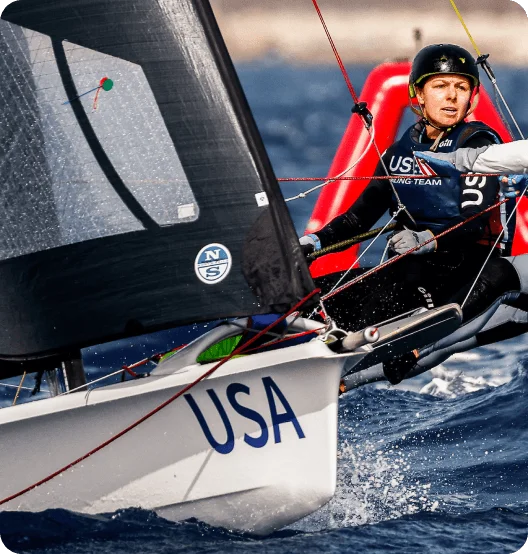
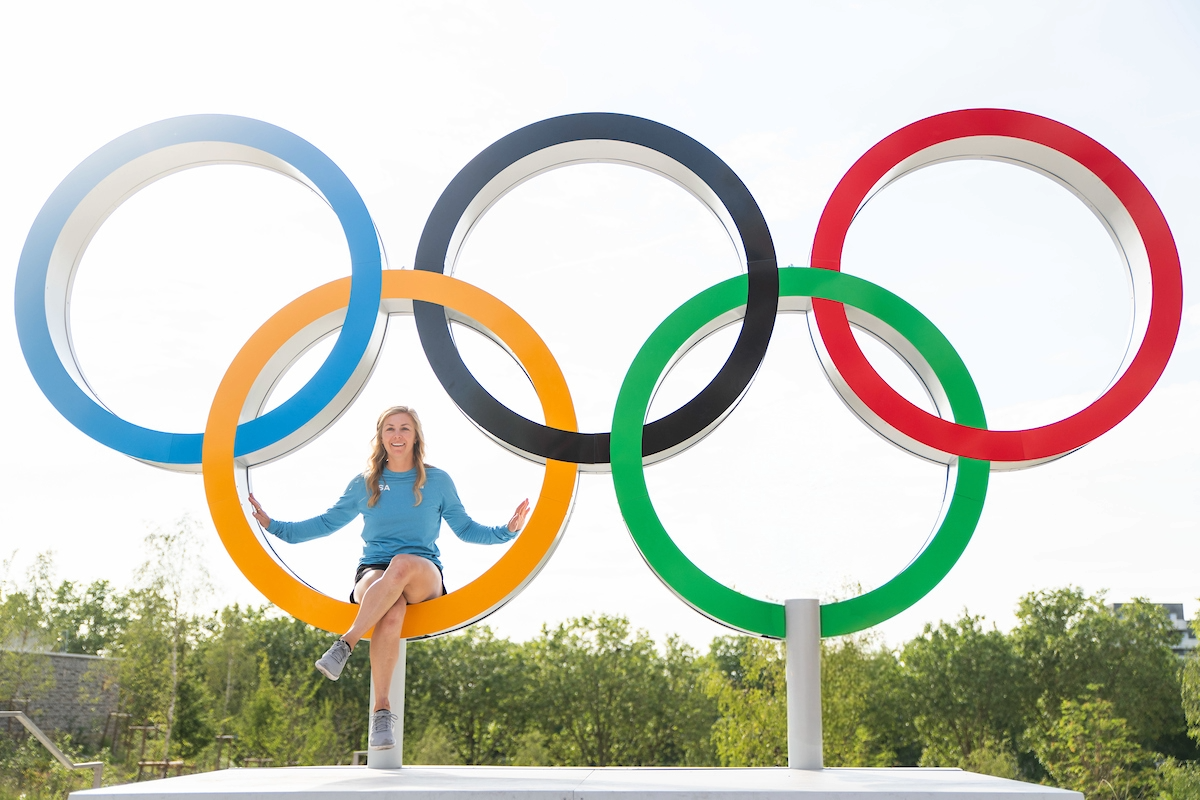
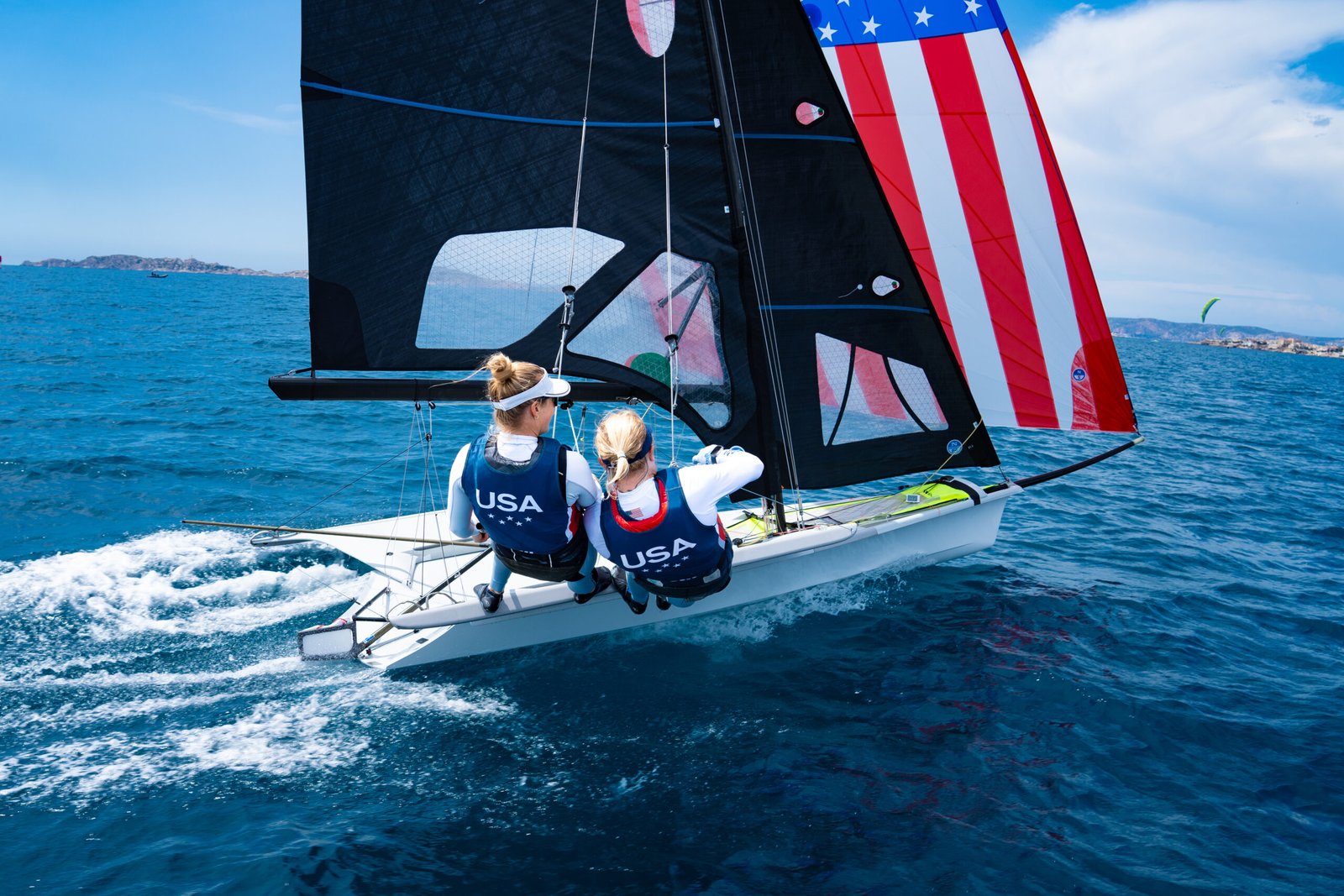
In the fall of 2016, I started training for the Olympics and was very successful in that pursuit. I ended up competing in two Olympic Games: the Tokyo 2020 Olympics and the Paris 2024 Olympics, in the 49erFX women’s class.
After Paris 2024, I decided to retire, which was a really hard decision. But something I knew all along was that fitness is really important to me. I’ve loved how fitness has helped me develop as a human, but also as an athlete.
After I retired, I said, “I don’t really know much about life right now, but the one thing I do know is that I love fitness and I love community.” I started bouncing around to different studios in Miami and trying different workouts.
When I saw BODYROK Miami was launching, I was looking for some different work. I had tried BODYROK in San Francisco when I was doing some work out there, and I decided, “Let’s see if I can become an instructor.” It was a fun way for me to step outside my comfort zone, try something new, connect with a new community, and do something I really love, which is fitness.
Kendall: I love that. I think the BODYROK coast-to-coast aspect is so important. It really is that community element that keeps people coming back—even taking people from clients to instructors, which is such an incredible journey to see play out.
Kendall: I want to backtrack just a little bit. How did you get into sailing? I’m sure you get this all the time, especially being from Wisconsin. I had no idea sailing was so big there, but I’ve been hearing that more often. Tell me about it. What sparked your interest?
Stephanie: I grew up on a small lake in Wisconsin. A lot of people are always like, “There’s sailing in Wisconsin? What?” But we actually have a really competitive environment here. People live it up in the summers and make the most of it. It’s a really fun sailing scene.
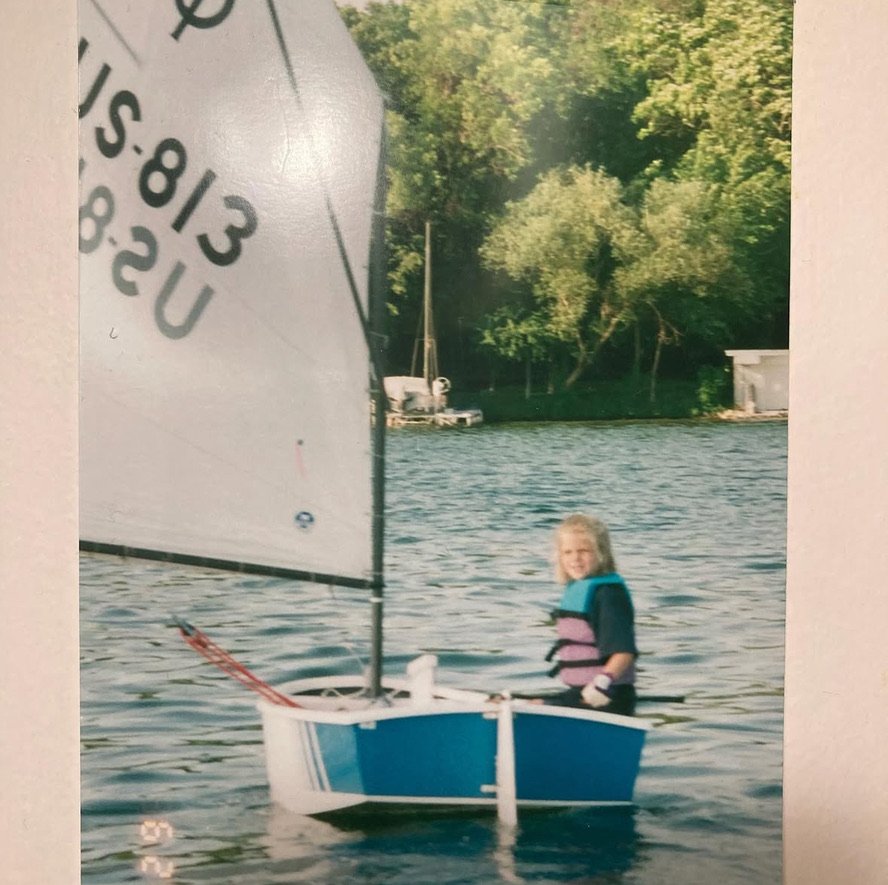
My parents put me in lessons when I was little. I started sailing when I was five. But actually, when I was born, my dad sailed around our little lake with “It’s a girl” on his sail. I like to joke with people: little did they know what they were manifesting for me in life.
Kendall: No, seriously. Ultimate manifestation—wow.
Stephanie: Yeah, that’s a very cool part of the story. Around four or five, they signed me up for lessons, like everyone does in the summertime here. At first, I totally hated it. Sailing is a scary sport. You’re put out on the water by yourself, and there are all these uncontrollable elements. I was really intimidated and really scared.
Ultimately, I learned that this was a way for me to spend time with my friends, my family, and my community on the water. I loved the water; I just didn’t like the sailing component of it. Eventually, I fell in love with it.
We have a race series here throughout the summer, and I won my first race. I got totally hooked on the feeling of winning and competing and working hard toward something. From a very early age, I had this strong desire to set big goals, compete, and win. That launched me to where I am today.
Kendall: And the scariest thing turned into something you could conquer. I love that.
Stephanie: Exactly. You start to trust yourself, train, and go for it.
Kendall: Okay, two Olympics—that is no casual feat. Tell me about those experiences.
Stephanie: The two Olympics I went to were very different. We had Tokyo 2020, which was during the height of COVID. They had to postpone the Olympics for a year, so it was technically Tokyo 2021. That in itself was wild. We had already qualified by the time they postponed.
Adding a year onto our training was really hard. We were at the peak of our game when we qualified, and that year made it really difficult to maintain that level.
Kendall: Right, because you don’t normally think about having to uphold that for a season—but that’s years.
Stephanie: Yeah. We had just won the bronze medal at the World Championship right before the Olympics were postponed. It’s like any sport: you’re trying to peak at the right time. We peaked at the right time, and then it was a lot to add another year.
The actual Olympic experience in Tokyo—we were so grateful that they made the Olympics happen, given what was going on with COVID—but it was a really quiet experience, and there were so many rules. We had to test for COVID every day. We had to limit our time around other athletes. There were no spectators at any events. For sailing, that isn’t really a big thing, but you’d be watching sports like basketball, gymnastics, or swimming, and there were no spectators in the crowd.
Kendall: That has to be really weird. There’s such a big part of the energy that comes from being together and supporting that rush.
Stephanie: Yeah. We weren’t allowed to go see other sports. We had to leave the country right after we were done competing. It was a very different experience, but, like I said, I’m very grateful they were able to host the Olympics.
I got to march in the opening ceremony, which was an amazing experience, even though we marched into an empty stadium. We were still there experiencing the unity of the world through sport, the lighting of the Olympic torch, and all the magic that goes along with it.
Then, fast-forward to Paris. We raced in a satellite area, so we were down in Marseille while the Olympics were happening in Paris. We finished racing and went up to Paris, and it was just an amazing experience to lean in and experience everything we didn’t get to experience in Tokyo.
I did the closing ceremony there, so that was awesome. I’ve done an opening and a closing ceremony—bucket-list items ticked off.
Kendall: Seriously—and a bucket-list item that not many people get to tick off. That’s incredible.
Stephanie: The Olympics themselves are just—what I love about them is how athletes push themselves day in and day out. The Olympics highlight what humans are capable of and also create this amazing arena for uniting the world through sport. It’s so beautiful.
You don’t really think about that until you’re at the Olympics. But when I look back on my journey and think about who I became in the process of becoming an Olympian, that was the best part of it all for me.
Kendall: Diving into the present day now: I’m sure you’re still sailing, and the relationship is probably just a little different. What are some of the things you take from your Olympic experiences—and, of course, your lifetime of sailing—into your day-to-day life now? What does that look like?
Stephanie: I’m still racing full-time. I race in more of a pro-am-style circuit on a couple of different teams and in different classes, and I have different roles on different boats.
That’s been really awesome and a good way for me to transition out of Olympic sailing. Something I’ve realized is that, for so many Olympians—think gymnastics—once you retire, you’re done with your sport. That hard cutoff would be so difficult. Sailing, on the other hand, is a lifetime sport, so I’m able to do it through a different lens now.
I work with a couple of different projects and programs throughout the year. Some of them are in Miami and some are in Newport, so that takes me traveling all over the place.
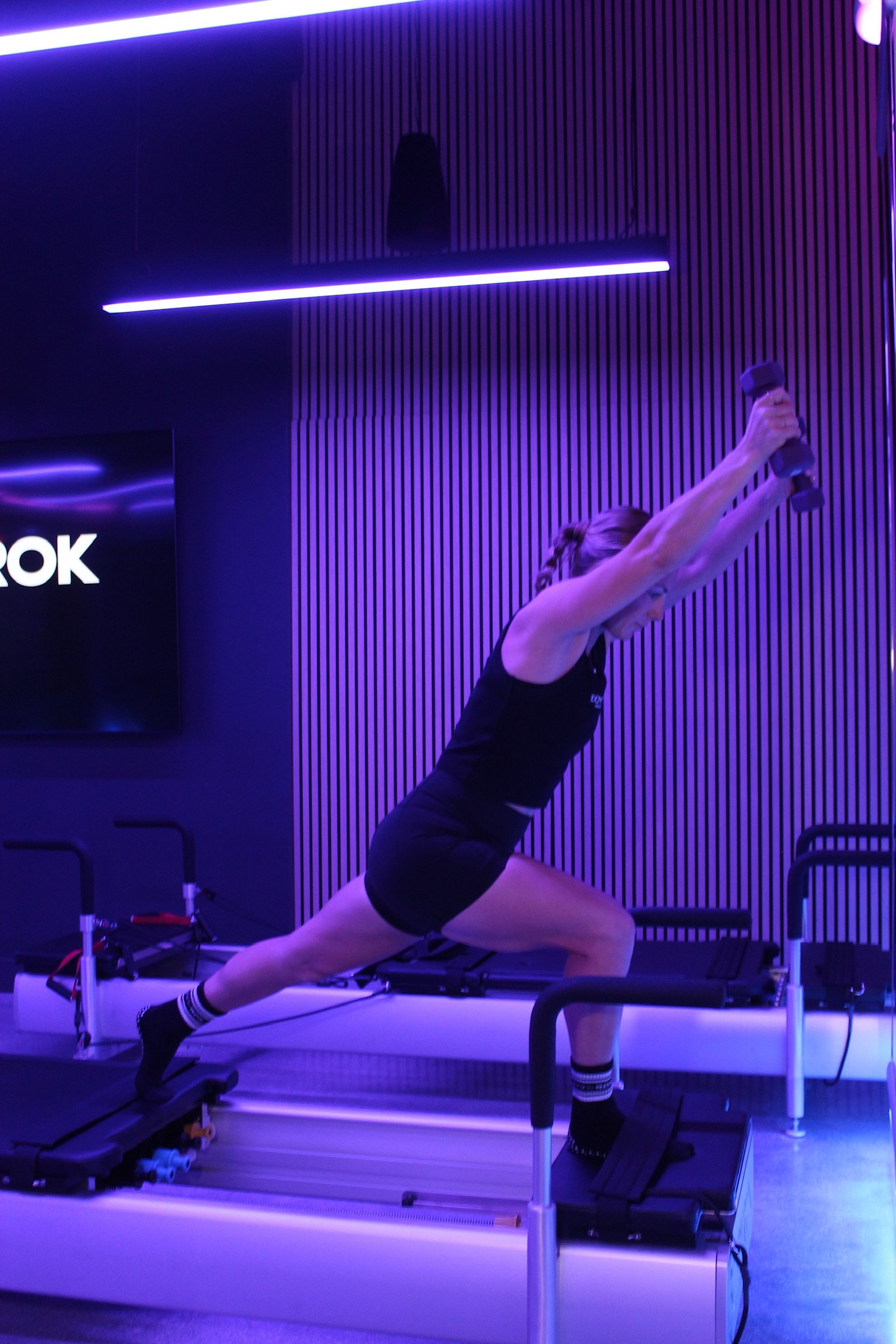
When I’m home, I love going to BODYROK, and I coach two days a week. It’s been such a fun experience to connect with a new community in Miami. I’ve only really ever known sailors, so it’s fun to connect with the fitness industry, which is obviously huge in Miami, and meet so many unique and amazing people—not only the instructors I get to work with, but also the clients who come through our classes. That’s been really fun and fulfilling for me.
I also get to share the fitness journey with other people. Something I’ve realized as I’ve stepped away from Olympic sport is that the fitness journey looks different for everyone. What’s most important is that people are showing up. To have an awesome place like BODYROK, where people are inspired to come do their workout and spend 45 minutes with you during their day, is really inspiring.
Kendall: It’s such an honor. We say it all the time: “It’s the best 45 minutes of your day,” but it really is. So many of us have connected with the brand for different reasons. Maybe it’s stepping out of your sport when you’re used to having teammates around and finding community again. Or maybe it’s 45 minutes when you can shut your brain off after a crazy day at work. It’s always such an honor that someone is choosing to spend that time with you and be in that room with you. It’s really beautiful.
Stephanie: Totally.
Kendall: How do you think your sailing background has influenced your classes?
Stephanie: I had a feeling you were going to ask this. It’s been interesting to think about how sailing has helped me as an instructor. The things that stick out to me most are, first, the agility required in sailing. So many things are out of our control—the wind, the water, the other competitors, all of that—so we’re constantly adapting.
You make a plan and execute something, and then you’re like, “Oh, this changed,” or, “This competitor did this.” Then you have to adapt and think on your toes.
I think those skills come into play a lot. We have our workout, but we adapt it to the clients in the room, whether that means adding modifications or variations. We’re always thinking on our toes. I had the power go out in class one day, so it was like, “How are we going to adapt to that?” You never know what to expect, so that has been fun.
The other really big thing has been communication. In sailing, the boat is moving so fast. You have so many different components to think about—from the boat speed, to the other competitors, to the wind strategy, to all the things your teammate is doing. You have to process and put all of that together in seconds.
We work really hard on communicating efficiently and effectively. Coming into BODYROK, it was a skill I had to learn through this new lens as an instructor, but it has inspired me in both directions. I’ve had to learn how to communicate really efficiently and effectively as an instructor, which has then forced me to do that even better in my sailing as well. That’s been a really cool connection.
Kendall: I love that. That is exactly where I wanted to go next—to flip the question. Since becoming an instructor and taking BODYROK, how has what you’re learning inside the BODYROK studio affected how your body ROKs mentally, physically, and otherwise in your life outside the studio?
Stephanie: That’s a good question. I’ve really enjoyed the challenge of all the workouts. Each one is so unique, and it’s such a fun environment to be in. That combination—and being around people who are dedicating time to their fitness journeys in so many different ways—has been really inspiring to me, too.
I used to work out to stand on top of a podium. That was my motivation every single day. Now, I’ve flipped the switch a bit. I’m working out to be fit for life and to be able to—I literally made a post about this the other day—say, “Hell yeah,” to any adventure that’s in front of me.
Adding BODYROK into my routine has really helped me find strength in a different way. I feel so connected to my body, and I feel challenged in every single workout I do. That’s been really fun.
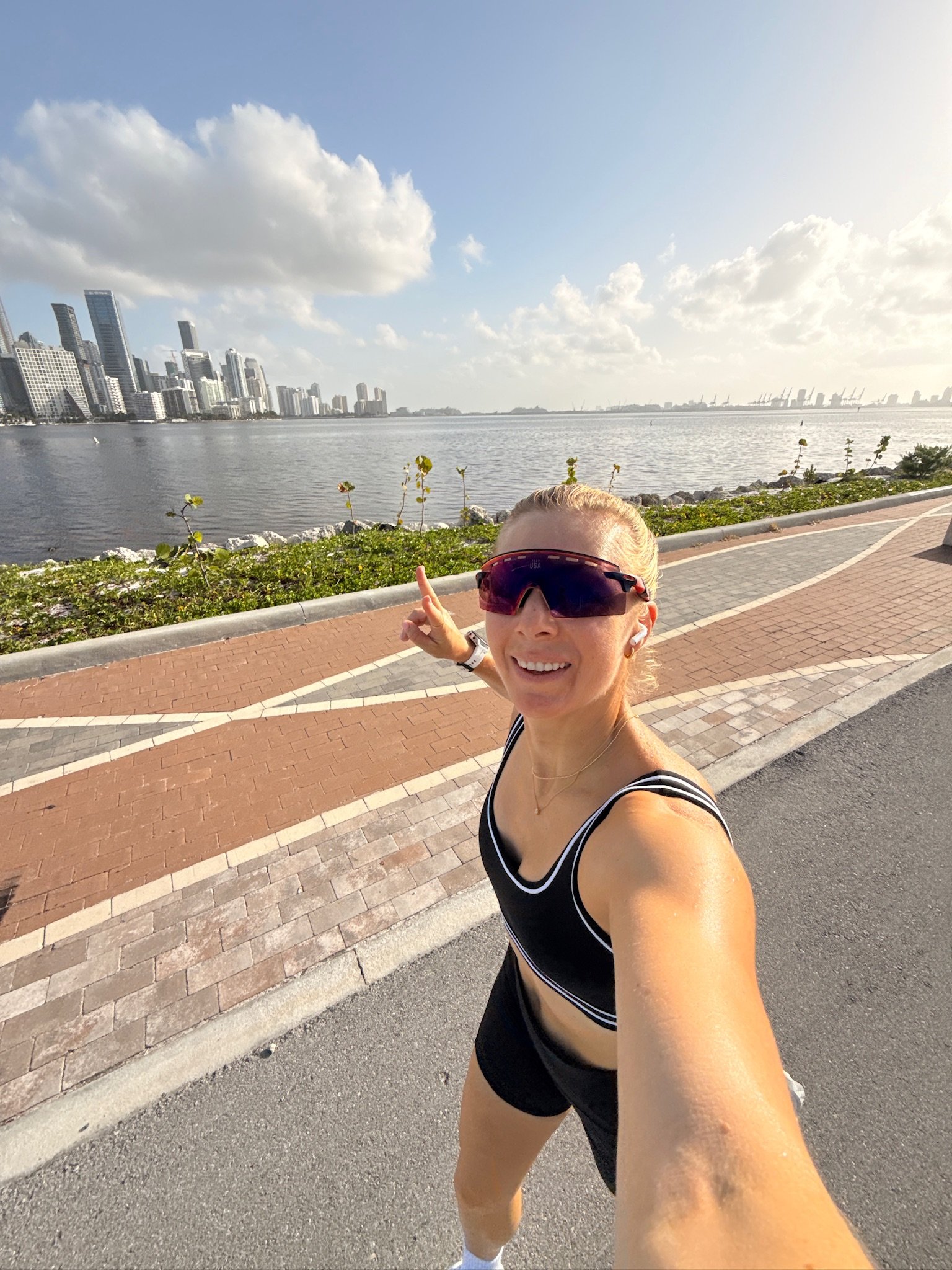
I’ve noticed a huge difference in all the other modalities I do. I’m really into running and cycling, and I still do weightlifting sometimes—reluctantly—but I think it’s really important as a human to be well-rounded. I like to do it all. I’ve noticed a huge difference in my body just by adding BODYROK every week. I go two or three days a week, so that’s been awesome.
I’ve also noticed a change in my confidence. Every day, I’m interacting with a group of sometimes all strangers, sometimes mostly strangers, and sometimes a lot of people I know—but you’re public speaking. I’ve noticed a really huge change in that, and in my ability to connect with people more quickly and just be myself in front of people. That’s been fun.
Kendall: Beautiful. Thank you so much, Stephanie. When can we take your class?
Stephanie: Come take class with me Mondays and Wednesdays. Monday at 10, 11, and 12; Wednesday at 9, 10, and 11. And I take as many subs as I can when I can. It’s so fun to fill the room, so please come be there with me.